
Getting a dental implant is one of the most meaningful investments you can make in your oral health, and the days and weeks that follow the procedure are where the real work begins. Recovery isn’t complicated, but it does require some patience and a little know-how. Understanding what’s normal, what to watch for, and how to support your healing can make the entire experience far smoother than most people expect.
At Red Rock Dental in Las Vegas, we’ve spent over 20 years guiding patients through every stage of the implant process, from the first consultation to the moment the final crown is placed. We take a conservative, minimally invasive approach to treatment, which means we prioritize protecting your surrounding tissue and bone from the very start. Whether you’ve just scheduled your dental implant procedure or you’re freshly post-op, here’s a clear picture of what the recovery process looks like.
The First 24 to 48 Hours
The first two days after your implant placement are typically the most uncomfortable, and that’s completely normal. You can expect some swelling around the jaw and cheek, mild bleeding near the surgical site, and general soreness in the area. Most patients manage this well with over-the-counter pain relievers, an ice pack applied in 20-minute intervals, and plenty of rest. Avoid rinsing vigorously, spitting forcefully, or using a straw during this window, as any of those actions can disturb the clotting process and slow healing.
Stick to soft foods like yogurt, mashed potatoes, scrambled eggs, and smoothies during this early phase. Staying well-nourished supports your body’s healing process, but you’ll want to keep anything hard, crunchy, or extremely hot away from the surgical site for at least the first week.
The First Two Weeks: Settling In
By the end of the first week, most patients notice a significant reduction in discomfort and swelling. The site may still feel tender when pressure is applied, but daily life becomes much more manageable. You can gradually reintroduce softer solid foods, though it’s wise to continue chewing on the opposite side of your mouth. Keeping up with your regular general dentistry habits is important during this phase. Gentle brushing around the implant site, along with saltwater rinses after meals, helps keep the area clean without irritating the tissue.
Some light bruising along the jaw or neck is not unusual during this window. If you have experience with healing from other minor oral surgeries, such as wisdom teeth removal, the first two weeks of implant recovery will feel familiar.
Osseointegration: The Most Important Phase
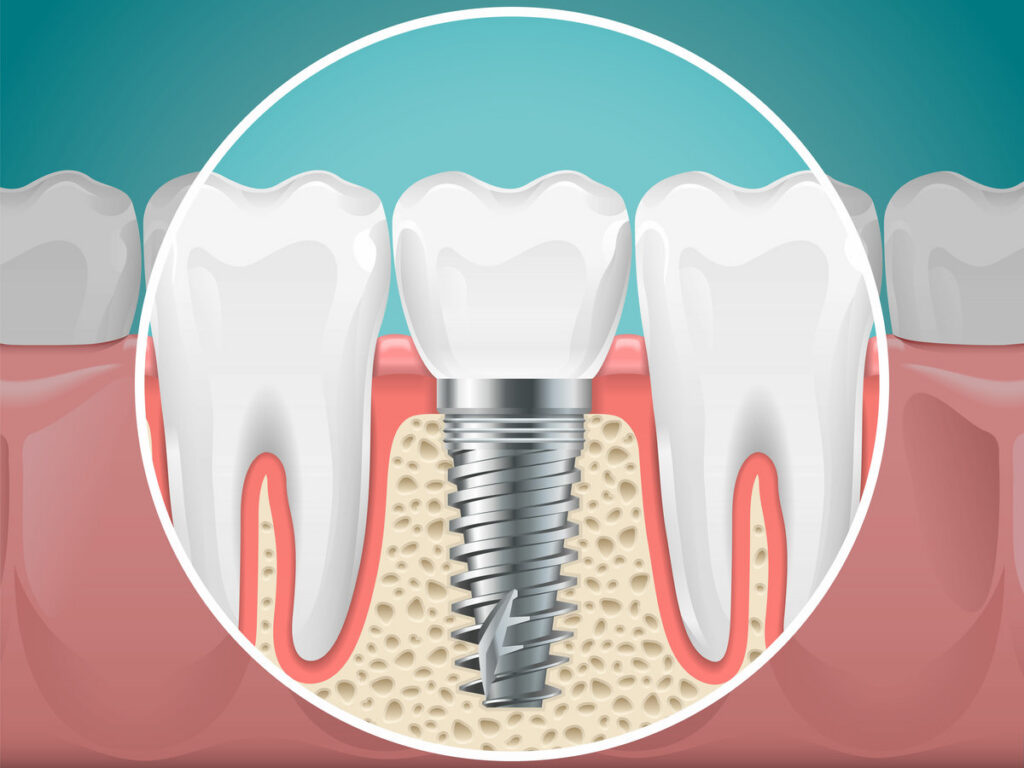
The most critical part of implant recovery happens largely beneath the surface. Osseointegration is the process by which the titanium post bonds directly to the surrounding jawbone, creating the stable foundation that makes implants so durable. According to a 2022 review published in Biomedical Research International, osseointegration is a time-dependent healing process in which bone tissue gradually apposes and remodels around the implant surface. This phase typically takes three to six months to complete, depending on factors like bone density, overall health, and lifestyle habits.
During this period, avoiding anything that could interfere with that bond is essential. That means steering clear of smoking, protecting the implant from excessive force, and following all post-operative instructions closely.
What Speeds Up or Slows Down Healing
Several factors influence how smoothly osseointegration progresses. Good nutrition, particularly adequate protein and vitamin D intake, supports bone formation. Staying hydrated and avoiding tobacco use can both meaningfully reduce the risk of complications. Patients with untreated gum disease are at a higher risk for healing disruptions, which is why we always address any active periodontal concerns before moving forward with implant placement.
Signs That Something May Need Attention
Recovery should trend consistently in one direction: better. If you notice any of the following, reach out to us promptly so we can evaluate what’s happening:
- Increasing pain or swelling after the first few days rather than gradually improving
- Persistent bleeding that doesn’t slow after applying gentle pressure
- A fever or signs of infection such as unusual discharge from the site
- The implant feeling loose or shifting at any point during healing
None of these symptoms necessarily mean something has gone seriously wrong, but they do warrant a conversation with our team sooner rather than later.
Schedule Your Implant Consultation at Red Rock Dental
Dr. Alan McCaffrey is a member of the American Academy of Implant Dentistry and devotes over 100 hours annually to continuing education alongside leading clinicians across the country. Dr. Thomas Booker brings the same quality-driven, conservative approach to every procedure he performs. As a locally owned and operated Las Vegas practice, we believe in being transparent about every step of your treatment, so you never feel like you’re going into something blind.
If you’re ready to take the next step toward a complete, confident smile, contact our office to schedule your consultation. We’ll walk you through exactly what to expect and make sure you feel fully prepared for the road ahead.
